HOW A BREAST PUMP BECAME A FAMILY'S LIFELINE
June 30, 2025
By Johanna Griggs AM
For years, Belinda and her husband Max volunteered at many of Humpty’s events. Belinda also worked at Humpty, initially heading up office management but ended up working across almost every department with her endless positivity and enthusiasm. One of the most heartwarming parts of her role was being able to visit hospitals with kind-hearted donors and witness them seeing the equipment they had donated.
She never imagined that one day she and Max would find themselves relying on many of those vital pieces, plastered with the distinct yellow plaques acknowledging generous individuals and businesses, to help keep their darling baby girl Matilda alive.
When pregnant with her son Hamish (now 4), Belinda was diagnosed with an autoimmune condition named Evans Syndrome, which causes Thrombocytopenia (loss of platelets which clot blood) and Haemolytic Anaemia (loss of red blood cells), which put her pregnancy in the high-risk category. She manages her flare-ups with medication, but when she fell pregnant with Matilda, it meant constant monitoring, until the decision was made to induce the birth at 38 weeks. And that’s where Matilda made her entry into the world.
After such a fraught pregnancy, to see Matilda arrive safely and seemingly healthy was an enormous relief. After receiving the "all clear" from her obstetrician and paediatrician, Belinda and Matilda settled into the maternity ward and were looking forward to getting Tilly home to meet her older brother. But less than 24 hours later, things had changed dramatically. A nurse noticed that Matilda was looking a little jaundiced. They tested her bilirubin levels and received quite the shock... for a baby less than 24 hours old she was just below the threshold for a blood transfusion. Somehow the Evans Syndrome antigens that destroyed Belinda’s red blood cells had transferred through her placenta and were attacking Matilda’s immune system. Untreated, severe jaundice can lead to brain damage and hearing loss.
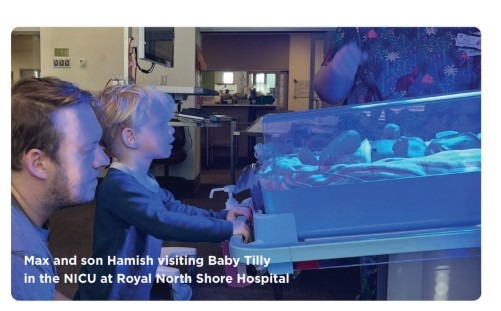
Matilda was whisked off to the Neonatal Intensive Care Unit (NICU) at Royal North Shore Hospital, where she underwent phototherapy treatment, including Triple Light Phototherapy and Quadruple Light Phototherapy (where her crib was lined in foil as well). She had feeding tubes in (as it was important that she always remained under the full phototherapy lights). Her vitals were constantly being monitored, and she was on a strict feeding routine every three hours.
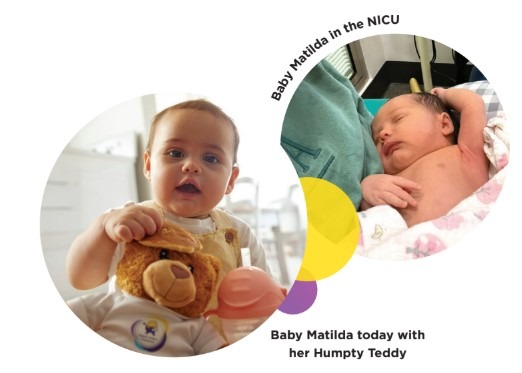
Across Australia, around 1 in 5 babies require emergency intervention at birth. It's not unusual at all for a new mum with a baby in NICU to be unable to directly breastfeed their baby. With seriously unwell and/or preterm babies, the goal of the nursing staff is to keep these tiny babies as peaceful and undisturbed as possible, so that every iota of energy goes into letting them grow and develop. If you are able to, you are strongly encouraged to provide breast milk by pumping, to give your newborn the nutrients and antibodies their little bodies need so desperately in those important early days.
As any new mum in this situation knows, it’s an incredibly tricky time to navigate – you are waiting for your milk to arrive, you know you need to pump to keep your milk coming in, and if you are lucky enough, like Belinda was, you have a hospital-grade breast pump available to let you do that.
“It was such an emotional time – I was feeling unbelievably guilty that my baby girl was sick because of me. We were watching her, looking so tiny, and so alone in a crib. I mean, I took great pride in the fact that almost all the equipment that was helping her had been donated by Humpty supporters. But we still felt utterly helpless.
Tilly was in the NICU for six days. We were separated from her each night and even though I knew she was in the safest hands with the wonderful nurses, doctors and midwives, that car ride home from the hospital each night with an empty car capsule and an empty bassinet at home was utterly heartbreaking.
The only way I knew I could contribute to her getting better was to pump the milk that I knew would give her the very best nutrition in those critical early days that she needed. It was incredibly important to me that during this time of uncertainty and helplessness, this would be something I could contribute; my gift to her.
And Max was then able to help with the tube feeding and eventually with some bottle feeds, meaning he too was also able to establish a nice bond.
I knew these pumps were hot property in the major city hospital we were in... and that there was endless demand for them. It made me question, what do new mums do in hospitals in remote or regional areas if this type of equipment isn’t available? We just felt so lucky and grateful that there wasn’t any impediment to us being able to help our daughter in the only way we could at that time.”
Ironically, as Belinda was using one of the pumps and scrolling through her phone, our 2024 Pumped for Life Mother’s Day Appeal post popped up. Without hesitation, she made a donation, knowing personally the difference that a simple pump could make.